
Sustainable Design Projects & Thesis Work
This section showcases my sustainable design projects and graduate thesis work, where research, systems thinking, and hands-on design come together. These projects explore practical approaches to circularity, material use, and construction, translating sustainability theory into testable, real-world design strategies.
Master's Thesis
Reconstructing Circularity: Construction Standards to Facilitate Garment Upcycling by Design
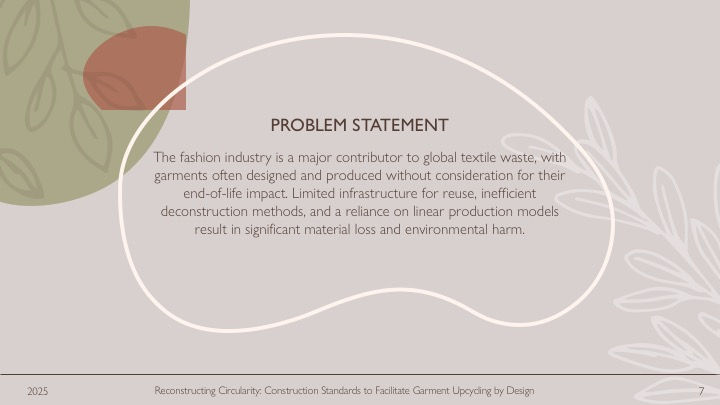
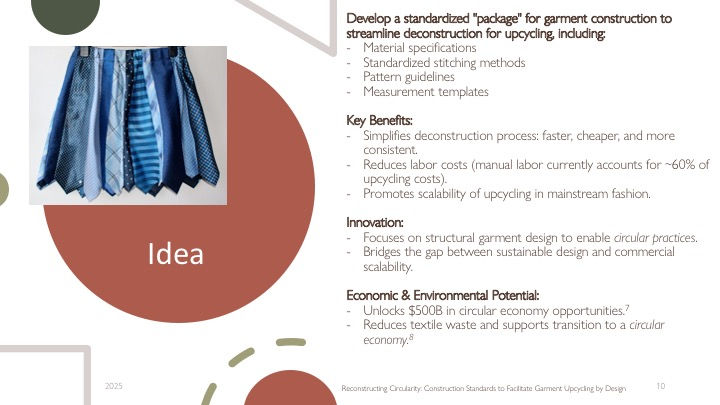
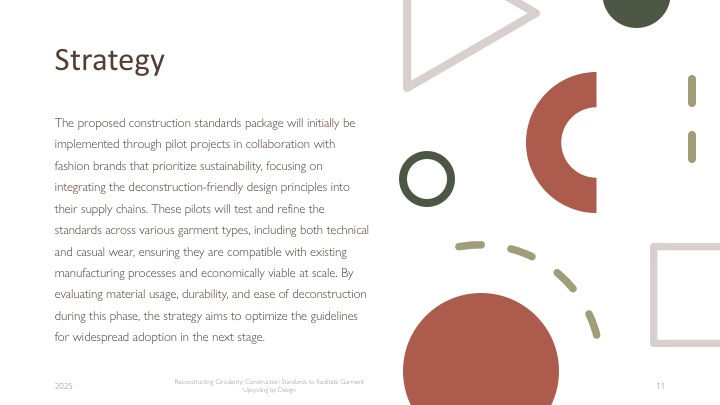
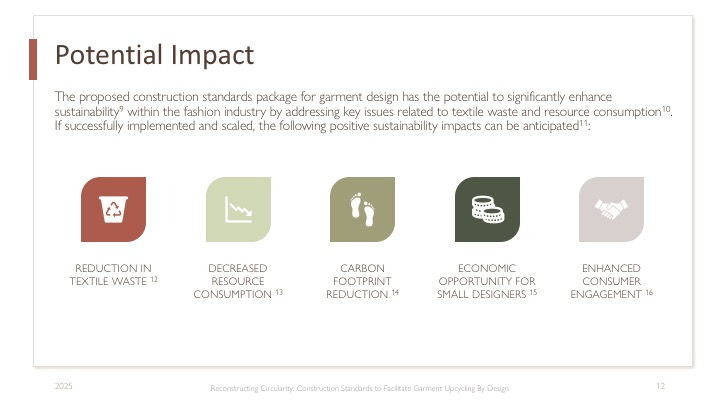
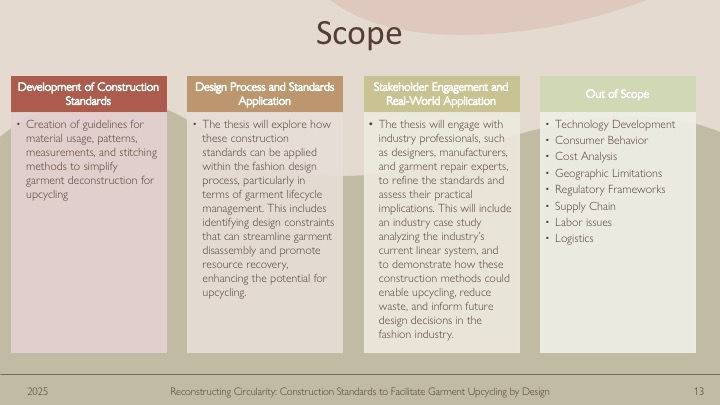
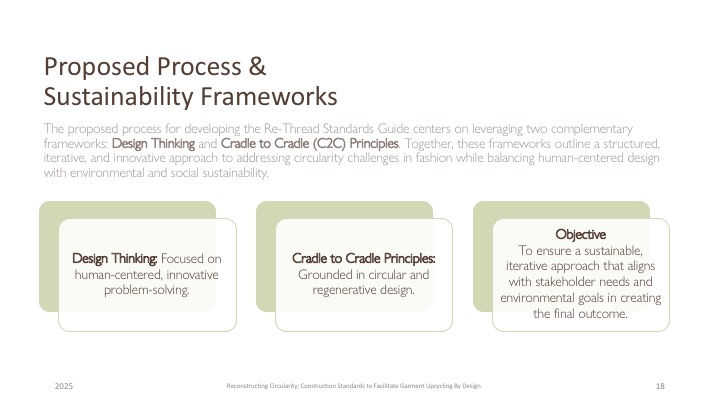
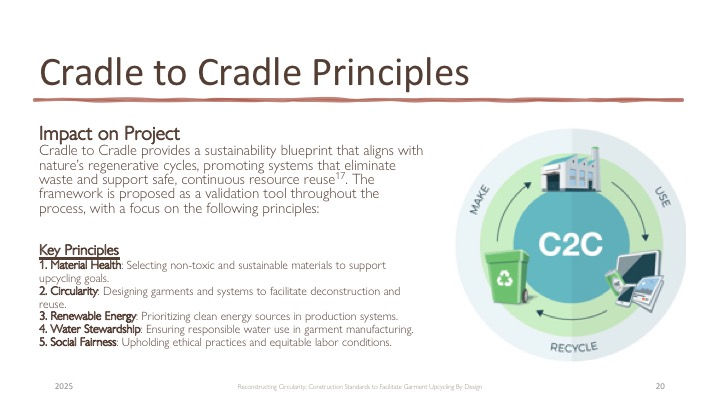
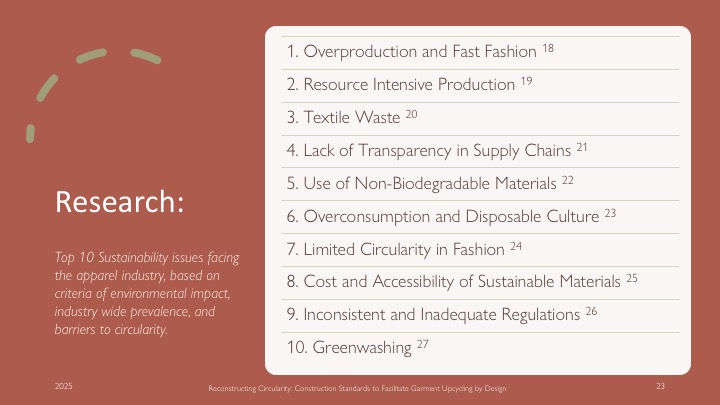
This thesis explores the development of the "Re-Thread Standards Guide," a comprehensive solution aimed at addressing the persistent challenges of waste and inefficiency in the fashion industry. Through iterative design explorations, the project investigates how garment construction methods can be reimagined to facilitate circularity, reduce textile waste, and promote upcycling at scale. The research applies the frameworks of Design Thinking and Cradle to Cradle Principles, iterating through five design stages that evolve from broad, conceptual ideas to a practical, actionable toolkit. Key interventions identified include the standardization of construction techniques, material transparency, and modular design practices that simplify garment deconstruction.
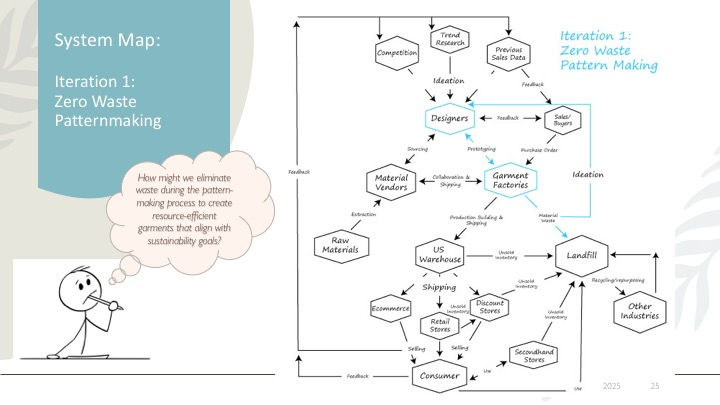
A demonstration of this work is the comparative case study of "The Ugly Rain Jacket," illustrating the current linear fashion system and the potential transformation when the Re-Thread Standards Guide is applied. Two systems maps demonstrate how the jacket’s lifecycle, from design to disposal, could be disrupted by circular practices—turning waste into valuable resources for future design. The guide offers a pathway for the fashion industry to adopt circular practices by integrating construction standards into existing industry frameworks, such as ISO or ASTM.
Ultimately, the Re-Thread Standards Guide serves as both a conceptual framework and a practical tool that bridges the gap between design and upcycling, enabling fashion brands to adopt more sustainable business models. By prioritizing the ease of garment deconstruction and material reuse, this work contributes a vital solution toward advancing sustainability in the fashion industry and facilitating its transition to a circular economy.










Other Sustainability Projects:


Systems Thinking
Systems Thinking aims to move us away from designing for the part to designing for the whole. Through understanding of product life cycles and languages of design, this course provided me with the tools to navigate today’s dynamic and uncertain world with a market specific project. Here I address designing technical outerwear garments through different lenses for how to approach the design, moving away from the present-day linear model. Instead, focusing on all the brand stakeholder’s involvement for increased collaboration and innovation of the product. I developed this for the brand Obermeyer, as I was working for the brand at the time of this project, and presented it to our Executive Team as part of a Sustainability Initiative.
Fundamentals of Sustainable Design
In this foundational course I was introduced to hands-on and holistic approaches to sustainability, through sustainability frameworks, principles, and materials assessments, as well as the history and logic behind them. In this project, research is presented into the processing, creation, and use of rayon, as rayon is often marketed as a “sustainable” fiber. Through a deeper look in to the lifecycle of rayon, there is an assessment made on the sustainability impacts of this material.


Making the Business Case for Sustainability
In this course I gained an understanding of the implications of sustainable business decisions, how to identify risk areas, long-term thinking strategies, and best practices for sustainable business models. Through the creation of a business plan, I looked at business through a designer’s eye to understand how all of these factors interconnect and ultimately direct how our products, processes, and systems are created. The presented business plan addresses the growing trend of sustainable “upcycled” fashion, through proposing upcycling and repairing garments at scale.
Biomimetic Design
In this course I learned how to abstract functional strategies from the wealth of design solutions available in nature in order to apply those strategies to creating innovative design. In this project, I abstract a design solution using the “Challenge to Biology” (C2B) methodology. I looked to biology in search for a natural outerwear fabric to solve the challenge of replacing petroleum-based fabrics such as polyester or nylon.


Designing Behavioral Change
Data tells us that people are concerned about climate change, and that many feel individuals should be doing more to address climate change. Yet, we consistently see a gap between beliefs and behavior. What are the reasons between these gaps, and how can designers help influence the everyday behavior of people to live in more sustainable ways? Here in this project, I address two sustainability challenges of reducing energy use, and increasing bike commuting through using different behavior change models.
Collaborative Product Design
This course provided tools for sustainable design innovation and metrics to measure success. Here we used creative and analytical skills, generating new ideas and 3D CAD renderings and evaluating designs with screening-level life-cycle assessments. Green innovation tools used include systems thinking, energy effectiveness, lightweighting, design for lifetime (repair, recycling, etc.), material choice, biomimicry, and persuasive design. The the bulk of this course was spent working in groups, using tools such as message boards and screen-sharing video chats. Here in this group project we designed a real product for a real company, Adventure Wagon. We worked with a product designer from Adventure Wagon to redesign their “Mule Bag”. With this redesign we aimed to benefit customers, the company themselves, and the rest of the world.


Practice of Sustainable Design
Data tells us that people are concerned about climate change, and that many feel individuals should be doing more to address climate change. Yet, we consistently see a gap between beliefs and behavior. What are the reasons between these gaps, and how can designers help influence the everyday behavior of people to live in more sustainable ways? Here in this project, I address two sustainability challenges of reducing energy use, and increasing bike commuting through using different behavior change models.
Packaging Sustainability
We handle packages every day and they account for a third of our waste stream. Using the format of a product-repositioning study, in this course I examined the core ideas of consumer perception and market triggers, material selection, environmental impact, and long-term strategic thinking through the redesign of a packaging item. For my project, I chose the ubiquitous toothpaste tube. By the end of this course, I was able to redesign the toothpaste tube to maximize the package's appeal while minimizing environmental impact.


Design For Climate Justice
There is no climate justice without social justice. How can we use design thinking, community engagement, and storytelling to reimagine how our human systems work and create a sense of good health and wellness? Designing new innovative solutions that tackle local and global issues in a more equitable and just way requires a systems transformation which addresses the unequal burden on certain communities. In addition to solution-based projects and assignments, in this course I used the United Nations Sustainable Development Goals (SDGs) and its indicators to examine issues of climate change and improvements in human conditions through a final environmental-justice-design project or campaign. This coursework resulted in a climate zine that was a reflective design assignment rooted in weekly readings and class discussions. Each spread responds to a key concept from the course—such as degrowth, community resilience, or climate grief—through personal reflection, critical analysis, and visual storytelling. The goal was to synthesize climate justice theories with individual perspective, using design as a tool for communication and transformation.


Creative Leadership
Economic, environmental, and ethical crises present leaders with new and complex challenges. Effective, resilient, and agile leaders employ a diversity of skills, experience, and resources to respond to humanity's greatest challenges with creative, innovative, and humane solutions. Students build their capacities to become creative leaders and to work constructively as part of dynamic and collaborative teams through the integration of an ecological perspective for their work, organizations, communities, and the planet. This project used the Diverse Economies Framework to analyze the complex economic systems women participate in—both visible and invisible. I created a campaign aimed at advancing women's financial independence by visualizing wage gaps, caregiving burdens, and gendered labor inequalities. The project highlighted creative leadership as a tool to confront systemic barriers and advocate for a more equitable economic future.


